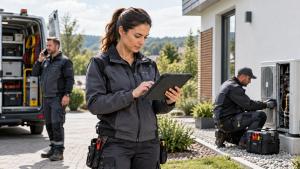
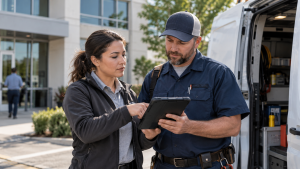
Mobile working has transformed the way organisations operate. Thanks to advances in mobile devices, cloud-based software, and digital communication tools, employees are no longer tied to a single office location. Field workers, remote teams, and mobile employees can now access the information and resources they need wherever their work takes them.
As expectations around flexibility, efficiency, and customer service continue to evolve, mobile working has become far more than a convenience. For organisations that want to remain competitive, productive, and adaptable, it is now a fundamental part of modern business operations.

Why Mobile Working Matters More Than Ever
One of the biggest advantages of mobile working is improved communication. Employees can stay connected with both colleagues and customers throughout the day using collaboration platforms and messaging tools. This enables organisations to respond quickly when plans change, keep customers informed about delays or updates, and ensure information flows smoothly between office and field teams.
It also provides employees with access to the same information and applications they would normally use in the office. Whether they are visiting customers, working remotely, or travelling between locations, staff can access schedules, documents, and business systems whenever they need them. This reduces delays, improves decision-making, and enables employees to work more efficiently.
For many organisations, mobile working also brings significant cost and productivity benefits. Employees spend less time commuting or travelling unnecessarily, while route optimisation tools help field teams plan appointments more effectively. Businesses can reduce office space requirements through flexible working arrangements and hot-desking policies, lowering operational costs while maintaining productivity.
By giving employees immediate access to information and digital workflows, organisations can also reduce the amount of time spent on administrative tasks. This creates additional capacity for higher-value work and helps ensure customers receive faster, more accurate service.
Embracing a Flexible Working Culture
The growth of mobile technology has changed expectations around when and where work happens. With access to email, messaging platforms, and mobile devices outside traditional office hours, some employees may feel pressure to remain constantly available. This makes it important for organisations to establish clear expectations and encourage healthy work-life balance.
When implemented effectively, mobile working offers greater flexibility for employees to manage their responsibilities in a way that suits both business requirements and personal commitments. This flexibility has become a major factor in attracting and retaining talent. Organisations are no longer limited to recruiting locally and can access a broader pool of skills and expertise from different locations.
The benefits extend beyond employee satisfaction. Flexible working models help organisations become more agile, adapt more quickly to changing circumstances, and improve overall workforce performance. These advantages can be particularly valuable for smaller businesses looking to remain competitive in a rapidly changing market.
As mobile working becomes more widespread, organisations must also consider how devices are managed and supported. Employees increasingly rely on smartphones, tablets, and laptops to perform their roles, making effective device management a critical part of any mobile strategy.
Making the Transition
The benefits of mobile working extend far beyond reducing travel costs or eliminating paperwork. When supported by the right technology, it increases productivity, improves collaboration, and enables organisations to operate more efficiently.
It also strengthens business continuity. Whether responding to unexpected disruptions, supporting distributed teams, or managing employees across different locations and time zones, mobile working allows operations to continue with minimal interruption.
Emerging technologies are further enhancing what mobile workers can achieve. Artificial intelligence, machine learning, and augmented reality are helping employees complete complex tasks more efficiently while improving operational workflows. At the same time, organisations must continue to prioritise security through measures such as virtual private networks (VPNs), multi-factor authentication, and ongoing employee awareness training.
Field service management software such as Synchroteam play a central role in this transformation. These solutions help organisations optimise scheduling, dispatching, communication, and real-time workforce visibility. As a result, businesses can respond faster, operate more efficiently, and deliver a better customer experience.
Conclusion
Mobile working has become a critical component of modern workforce management. It enables employees to stay connected, access information wherever they are, and work more productively without being restricted to a traditional office environment.
For organisations, the benefits are equally significant. Improved communication, greater flexibility, enhanced efficiency, and lower operational costs all contribute to stronger business performance. Combined with the right security measures and supporting technologies, mobile working helps businesses remain resilient and responsive in an increasingly digital world.
As customer expectations continue to rise and technology continues to evolve, organisations that embrace mobile working will be better positioned to attract talent, improve service delivery, and maintain a competitive advantage for years to come. Start today with our free demo!
Image by Naden Design